Research library / Blends
What is peptide?
Three peptides in one vial, taken apart component by component.
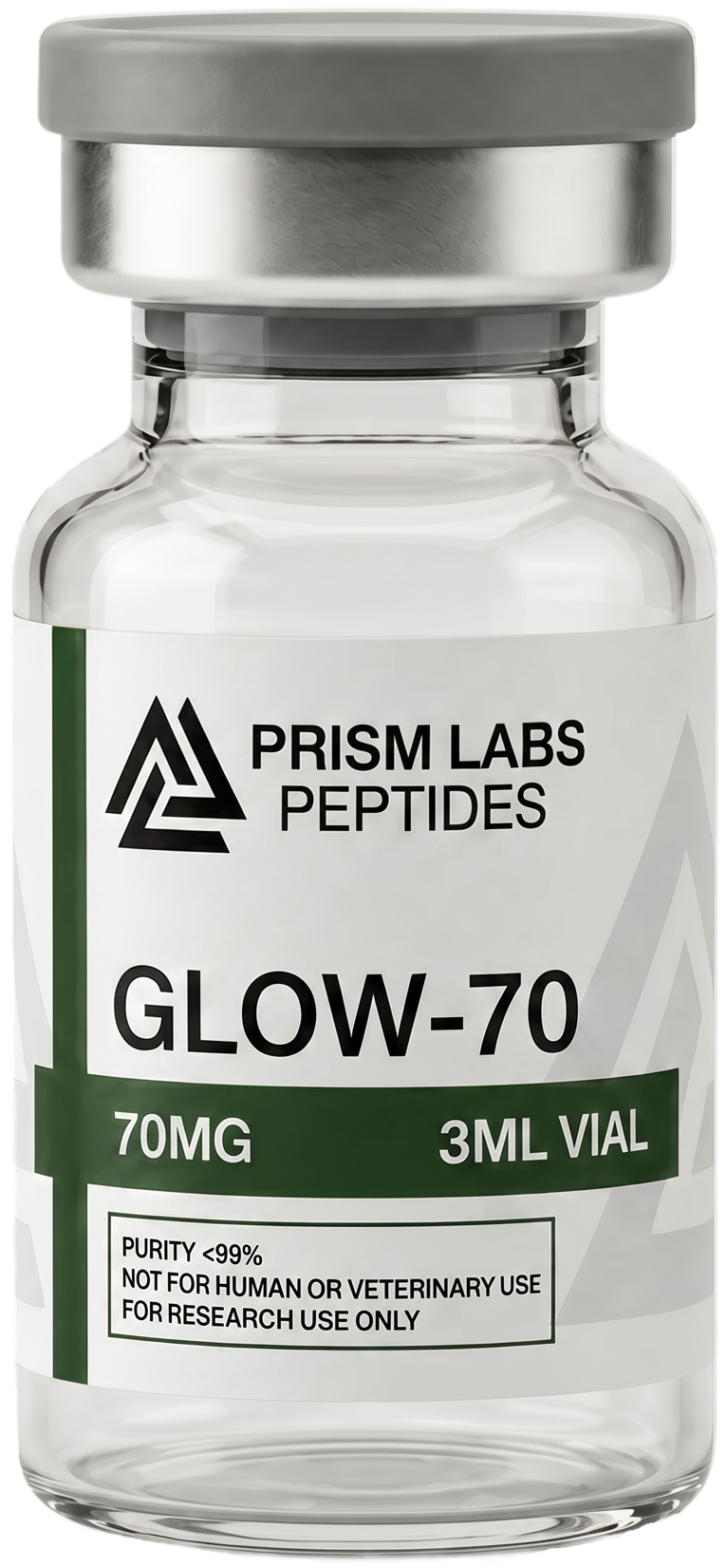
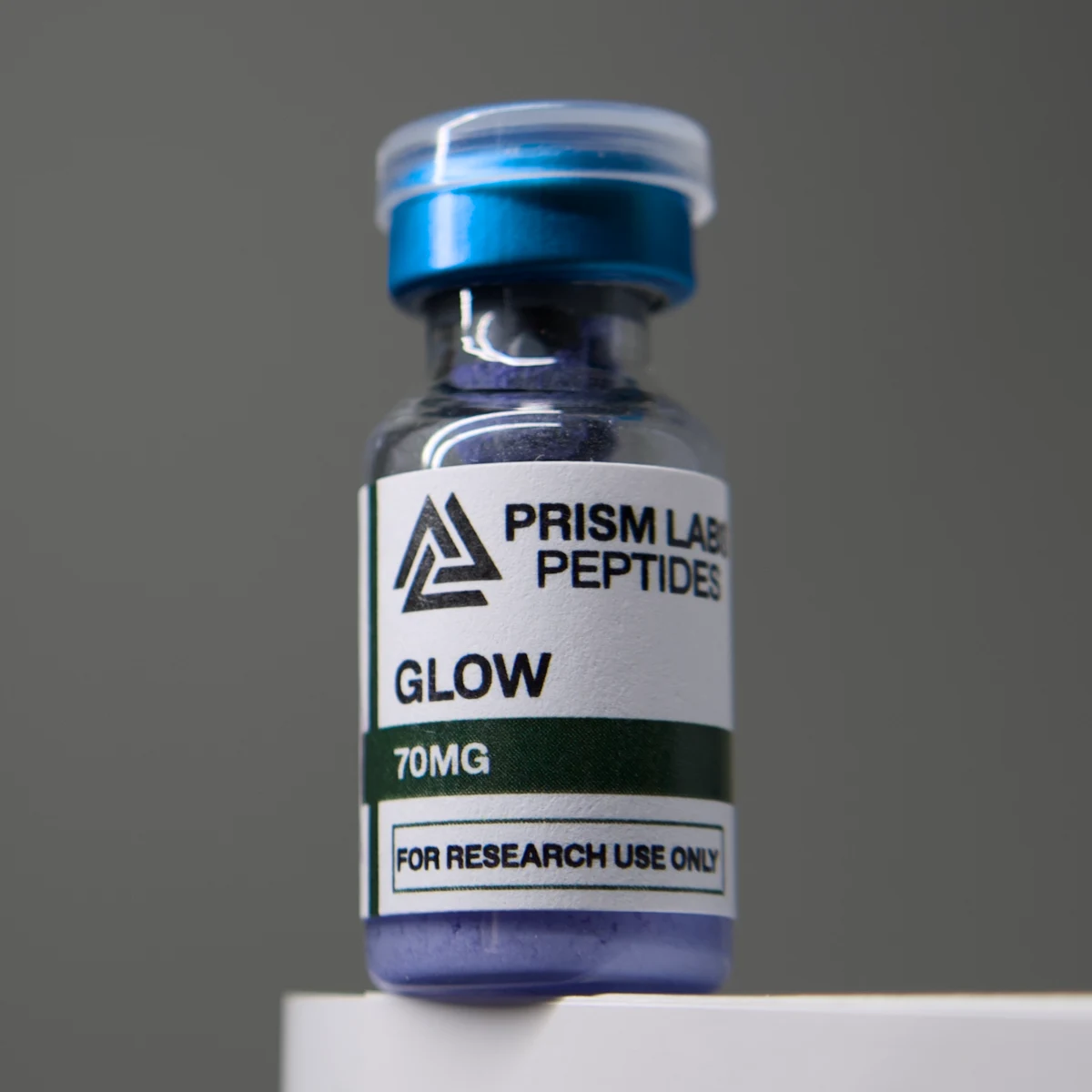
is a research blend of three peptides in one vial: , and . Prism Labs supplies it as , a 70 mg lyophilized vial with its own certificate of analysis for every lot. Here is what each component is, where it came from, and how it differs from .
01
What’s in
combines three separate peptides:
- : the copper complex of glycyl-histidyl-lysine, a tripeptide first reported in human plasma.
- : a stable 15-residue fragment of a gastric-juice protein.
- : a synthetic peptide based on thymosin beta-4, an actin-binding protein.
As a blend, it has no single sequence or molecular formula, and the certificate of analysis for each lot reports the blend as a whole.
Sources: [1] Nature New Biology · 1973 · [3] Journal of Physiology (Paris) · 1993 · [5] PNAS · 1981
02
Where the components came from
The copper tripeptide is the oldest of the three. Loren Pickart reported the peptide in human plasma in 1973; its strong affinity for copper(II) is why , the copper complex, is the studied form.
is a fragment of a gastric-juice protein described by Predrag Sikirić’s group in Zagreb in 1993.
takes its name from thymosin beta-4, a 43-residue protein sequenced in 1981 and later shown to bind actin. Suppliers use the name for more than one thymosin-derived sequence: what refers to.
Sources: [1] Nature New Biology · 1973 · [3] Journal of Physiology (Paris) · 1993 · [5] PNAS · 1981 · [7] Journal of Biological Chemistry · 1991
03
vs
contains all three of these peptides and adds a fourth, , the C-terminal tripeptide of α-MSH. It also comes in an 80 mg vial instead of 70 mg.
No study cited here tested either finished blend. The full comparison: vs .
04
What the components have been studied for
The literature is component by component, mostly from cell and animal models:
- : tissue remodeling, collagen-related signaling and skin-cell research.
- : gastrointestinal, tendon and blood-vessel growth-factor research in animal models.
- Thymosin beta-4: actin binding, cell migration and blood-vessel development.
These are observations in laboratory models. They are not evidence about any use in people.
Sources: [2] BioMed Research International · 2015 · [4] Current Pharmaceutical Design · 2018 · [6] Annals of the New York Academy of Sciences · 2007 · [7] Journal of Biological Chemistry · 1991
05
How it is supplied and stored
ships as a lyophilized (freeze-dried) powder in 70 mg vials. The powder is stable at room temperature in transit. For lab use it is reconstituted with bacteriostatic water such as .
Concentration is content divided by volume: 70 mg in 3.5 mL gives 20 mg per mL. The reconstitution calculator handles other combinations.
For storage before and after reconstitution, see how to store lyophilized peptides.
06
How to verify a batch
Every lot has its own certificate of analysis from an independent lab. Read three results separately:
- Identity: confirms the expected compound was detected.
- Purity: the share of the measured material that is the intended compound.
- Content: the amount measured, compared with the label.
Then match the lot number on your vial or bottle to the report, and use the report’s verification link to confirm it with the testing lab. Step by step: how to read a peptide COA.
A little more clarity
Questions, answered
What is peptide?
A three-peptide research blend: , and in one lyophilized vial. Prism Labs sells it as , a 70 mg vial.
What is the difference between and ?
contains the same three peptides plus , in an 80 mg vial. has three components in 70 mg.
Is a single peptide?
No. It is three separate peptides in one vial, so it has no single sequence or formula. The COA reports the blend.
How is stored?
As a lyophilized powder, stable at room temperature in transit. For storage after reconstitution, see how to store peptides.
Is it for human use?
No. Prism Labs sells it for laboratory research use only.
Follow the evidence
Sources & reading notes
Open the original record for its methods and limitations. The sources below do not certify the supplied product or its finished formulation.
- Nature New Biology · 1973 ↗
Original report of the tripeptide in human plasma.
- BioMed Research International · 2015 ↗
Review of skin-cell and cellular-pathway research on the copper peptide.
- Journal of Physiology (Paris) · 1993 ↗
The gastric-juice protein behind the 15-residue fragment.
- Current Pharmaceutical Design · 2018 ↗
Review of growth-factor and blood-vessel research in animal models.
- PNAS · 1981 ↗
Complete amino-acid sequence of thymosin beta-4.
- Annals of the New York Academy of Sciences · 2007 ↗
Thymosin beta-4 in coronary blood-vessel development in mice.
- Journal of Biological Chemistry · 1991 ↗
Thymosin beta-4 identified as a major actin-binding peptide.
Prepared by Prism Labs from the linked source records and public product documentation. Research context only; not a preparation protocol or a claim about outcomes. Send a source correction.
Keep exploring
More from the research library.
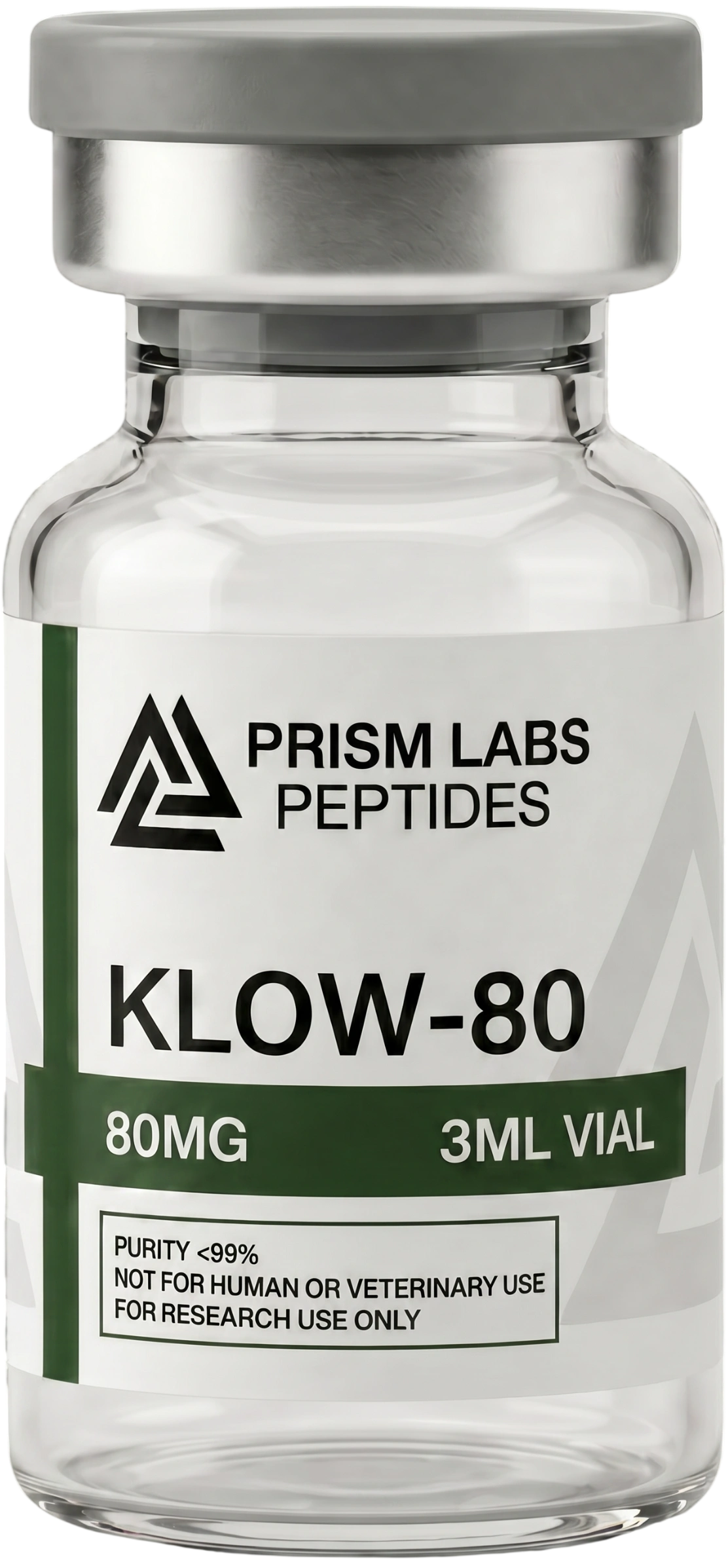
A four-peptide blend, taken apart component by component.
Read the article ↗Blends
Two peptides, two receptors, one vial, and what “No DAC” means.
Read the article ↗Compounds
The first 29 of human GHRH’s 44 amino acids, with nothing added.
Read the article ↗