Research library / Compounds
What is ?
The last 15 amino acids of human growth hormone, plus one tyrosine.
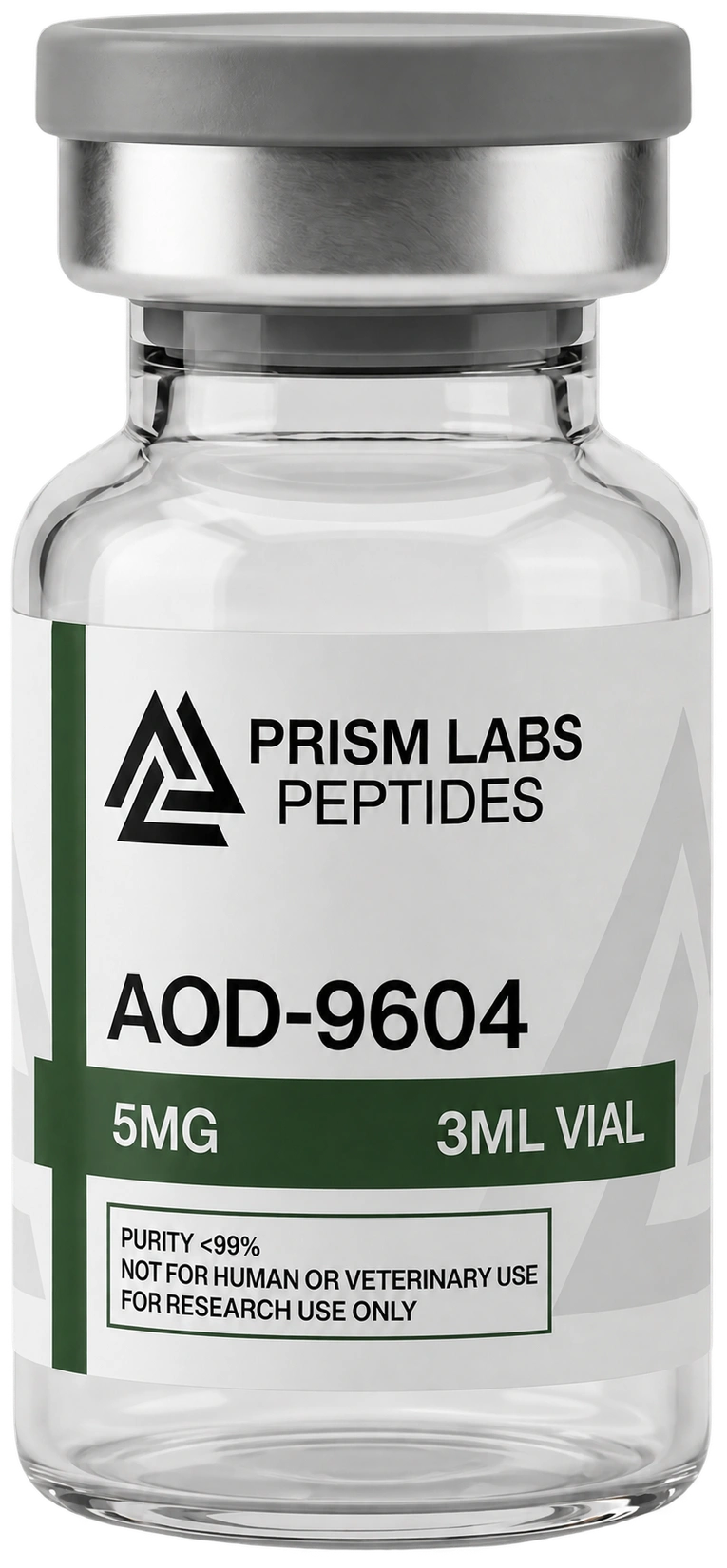
is a synthetic 16-amino-acid peptide made from the end of human growth hormone: the hormone’s last 15 residues (177 to 191), with one tyrosine added at the front. A bond between its two cysteines closes part of the chain into a loop. Prism Labs supplies it as a 5 mg lyophilized vial.
01
What it is
Its sequence, in one-letter amino-acid code, is YLRIVQCRSVEGSCGF. The Y is the added tyrosine; the rest is the final stretch of growth hormone’s 191-amino-acid chain. A disulfide bond (a sulfur-to-sulfur link) joins the cysteines at positions 7 and 14, closing a loop of eight residues.
The reference record lists the formula C78H123N23O23S2 and an average molar mass of about 1,815 g/mol (PubChem CID 71300630), under a tenth of growth hormone’s roughly 22,000 g/mol.
Sources: [1] PubChem · reference structure · [10] Drug Testing and Analysis · 2015 · [5] Journal of Peptide Research · 2000 · [2] Pharmeuropa Bio · 2004
02
Where it came from
In 1993, a group at Monash University in Australia synthesized growth hormone’s residues 177 to 191 and tested them on rat tissue. They concluded that one of the hormone’s actions on lipid synthesis is carried by this end of the chain.
The group then studied a version with a tyrosine added at the front, the peptide described here, publishing work in rats and mice from 2000. A 2004 drug-development profile reports early-phase clinical trials under way by 2002.
Sources: [3] Biochemistry and Molecular Biology International · 1993 · [4] Hormone Research · 2000 · [7] Endocrinology · 2001 · [8] Current Opinion in Investigational Drugs · 2004
03
A fragment, not the whole hormone
Growth hormone is a 191-amino-acid protein made by the pituitary gland, and it acts through its own receptor. The question was whether a small piece could carry one of its activities alone:
- Shape: a 2000 NMR study, which maps a molecule’s shape in solution, found the looped 15-residue fragment keeps some of the fold that stretch has inside the whole hormone.
- Receptor: in 2001 cell assays, the 16-residue peptide did not compete for the growth hormone receptor and, unlike the hormone, did not make receptor-carrying cells multiply.
and act further up the same axis, signaling the pituitary to release growth hormone; this peptide is a piece of the hormone itself. See What is ? and What is ?
Sources: [2] Pharmeuropa Bio · 2004 · [5] Journal of Peptide Research · 2000 · [6] Receptor and mouse studies · 2001
04
What researchers have studied
Its literature is mostly animal and laboratory work:
- Lipid metabolism in rats and mice (2000–2001): lipolysis, the breakdown of stored lipids, and energy use.
- Receptor pathways (2001): mice lacking the β3-adrenergic receptor, to test whether that receptor was required.
- Joint cartilage (2015): injections into rabbit knees, alone or with hyaluronic acid, after cartilage damage induced with an enzyme.
- Detection (2015): an anti-doping urine test, and a breakdown product in serum, the nine-residue CRSVEGSCG, that outlasts the intact peptide.
These are observations in laboratory models. They are not evidence about any use in people.
Sources: [4] Hormone Research · 2000 · [7] Endocrinology · 2001 · [6] Receptor and mouse studies · 2001 · [9] Annals of Clinical and Laboratory Science · 2015 · [10] Drug Testing and Analysis · 2015
05
How it is supplied and stored
ships as a lyophilized (freeze-dried) powder in 5 mg vials. The powder is stable at room temperature in transit. For lab use it is reconstituted with bacteriostatic water such as .
Concentration is content divided by volume: 5 mg in 2 mL gives 2.5 mg per mL. The reconstitution calculator handles other combinations.
For storage before and after reconstitution, see how to store lyophilized peptides.
06
How to verify a batch
Every lot has its own certificate of analysis from an independent lab. Read three results separately:
- Identity: confirms the expected compound was detected.
- Purity: the share of the measured material that is the intended compound.
- Content: the amount measured, compared with the label.
Then match the lot number on your vial or bottle to the report, and use the report’s verification link to confirm it with the testing lab. Step by step: how to read a peptide COA.
A little more clarity
Questions, answered
What is ?
A synthetic 16-amino-acid peptide from the end of human growth hormone: residues 177 to 191 plus an added tyrosine, with a disulfide bond closing a loop.
Is the same as growth hormone?
No. Growth hormone is a 191-amino-acid protein; this is a 16-residue piece of it. In 2001 cell assays it did not compete for the growth hormone receptor.
What is the sequence of ?
YLRIVQCRSVEGSCGF, with a disulfide bond between the two cysteines. The reference formula is C78H123N23O23S2, about 1,815 g/mol.
Where did come from?
A growth hormone research group at Monash University in Australia, which published studies of it from 2000.
Is it for human use?
No. Prism Labs sells it for laboratory research use only.
Follow the evidence
Sources & reading notes
Open the original record for its methods and limitations. The sources below do not certify the supplied product or its finished formulation.
- PubChem · reference structure ↗
The reference structure in the product specifications: sequence, disulfide loop, formula and average molar mass. Not a measurement of the supplied batch.
- Pharmeuropa Bio · 2004 ↗
Review of human growth hormone’s structure: a 191-amino-acid, single-chain protein of about 22 kDa.
- Biochemistry and Molecular Biology International · 1993 ↗
The synthetic 177–191 sequence tested on rat tissue for activity on lipid synthesis.
- Hormone Research · 2000 ↗
Studies of the 16-residue peptide in a rat strain used in metabolic research.
- Journal of Peptide Research · 2000 ↗
NMR solution structure of the looped 15-residue fragment, compared with the same region of the whole hormone.
- Receptor and mouse studies · 2001 ↗
Cell assays with the human growth hormone receptor, alongside mouse experiments.
- Endocrinology · 2001 ↗
Lipid-metabolism experiments in mice, including a receptor-knockout strain.
- Current Opinion in Investigational Drugs · 2004 ↗
Short drug-development profile noting early-phase clinical trials under way by 2002.
- Annals of Clinical and Laboratory Science · 2015 ↗
Knee-cartilage model in rabbits, with and without hyaluronic acid; not a human-use study.
- Drug Testing and Analysis · 2015 ↗
Anti-doping detection method; describes the peptide as residues 177–191 plus an added tyrosine and identifies its breakdown products.
Prepared by Prism Labs from the linked source records and public product documentation. Research context only; not a preparation protocol or a claim about outcomes. Send a source correction.
Keep exploring
More from the research library.
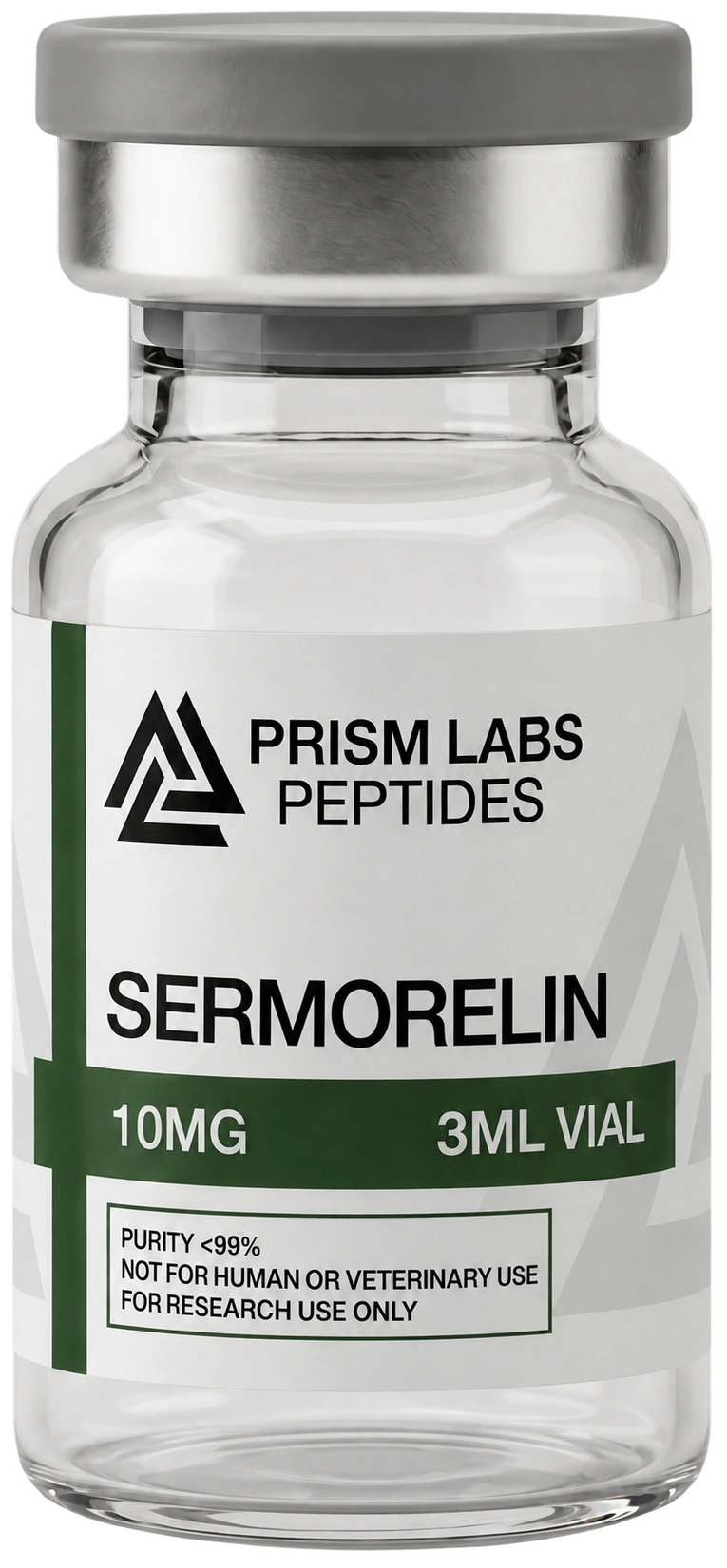
The first 29 of human GHRH’s 44 amino acids, with nothing added.
Read the article ↗Compounds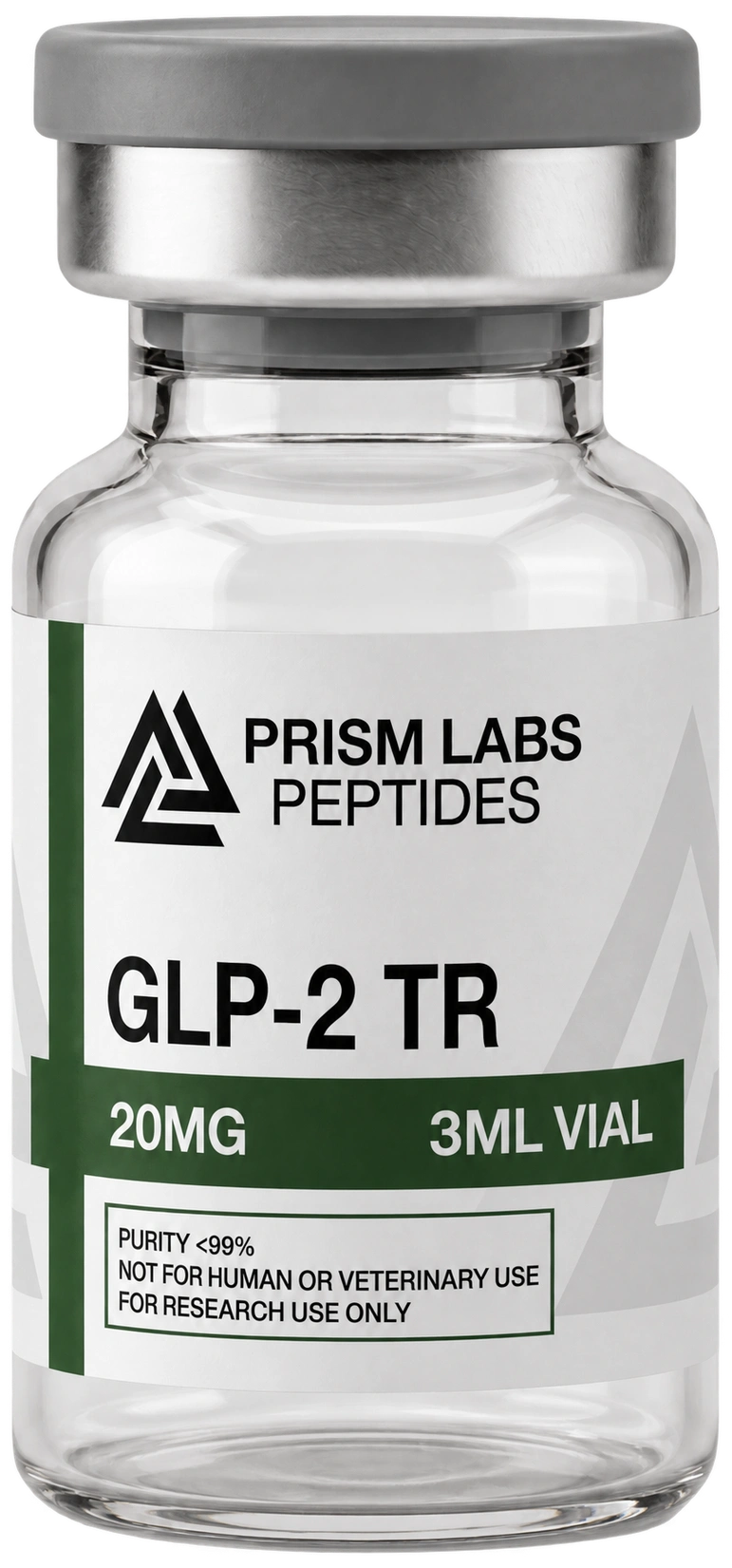
A lipid-linked peptide built to act on two related hormone receptors at once.
Read the article ↗Compounds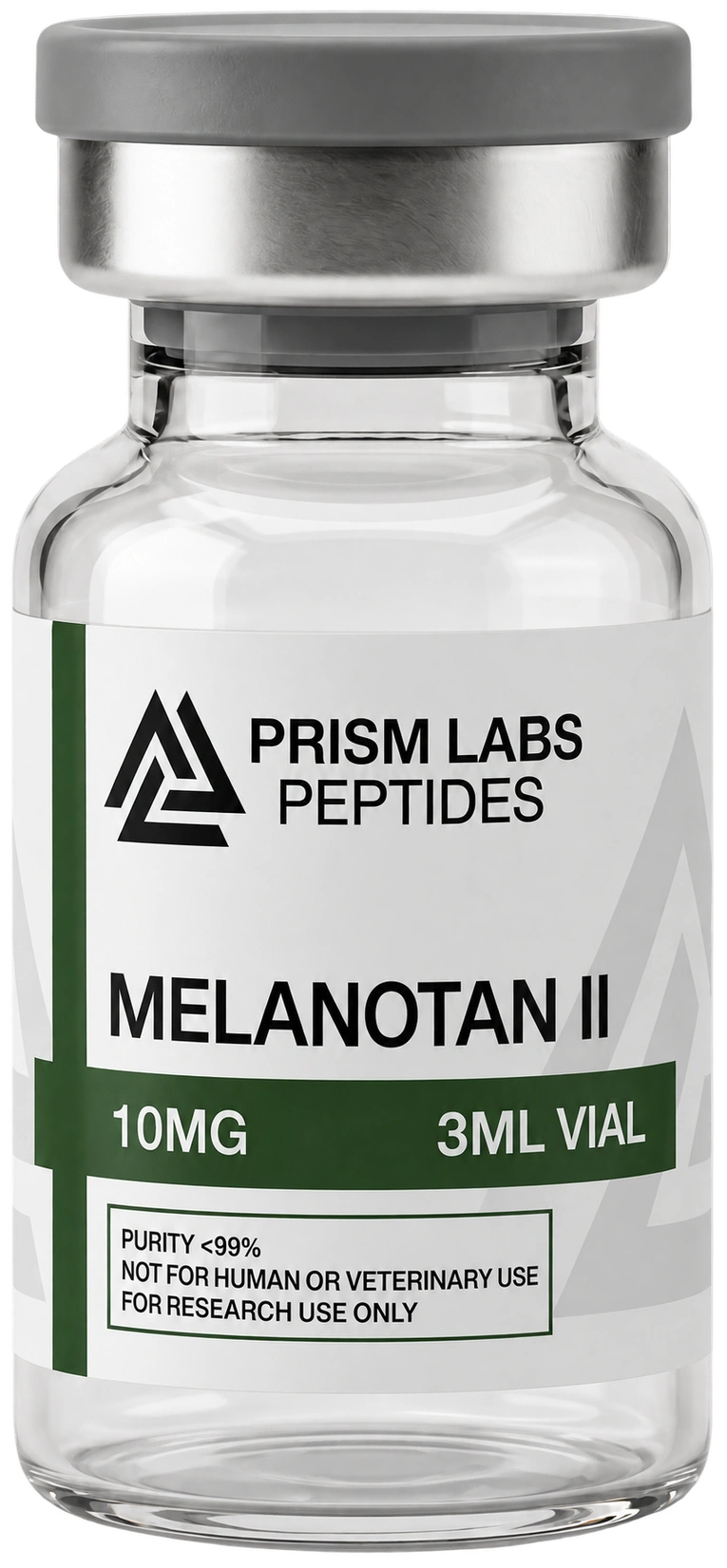
Part of the hormone α-MSH, rebuilt in 1989 as a cyclic seven-residue peptide to study melanocortin receptors.
Read the article ↗