Research library / Guides
How to reconstitute peptides, step by step
Seven steps from dry powder to a clear, labeled vial, plus the concentration math.
Reconstituting a peptide means adding bacteriostatic water to a vial of dry, lyophilized powder so it dissolves into a solution of known concentration. Let the vial reach room temperature, disinfect the stopper, run the water slowly down the inside wall, swirl gently until the solution is clear, then label the vial and refrigerate it. Each step is below, with the concentration math and what to do when something looks wrong.
01
What you need
Work on a clean surface with clean hands, and have these ready:
- The peptide vial: dry, lyophilized powder under a rubber stopper.
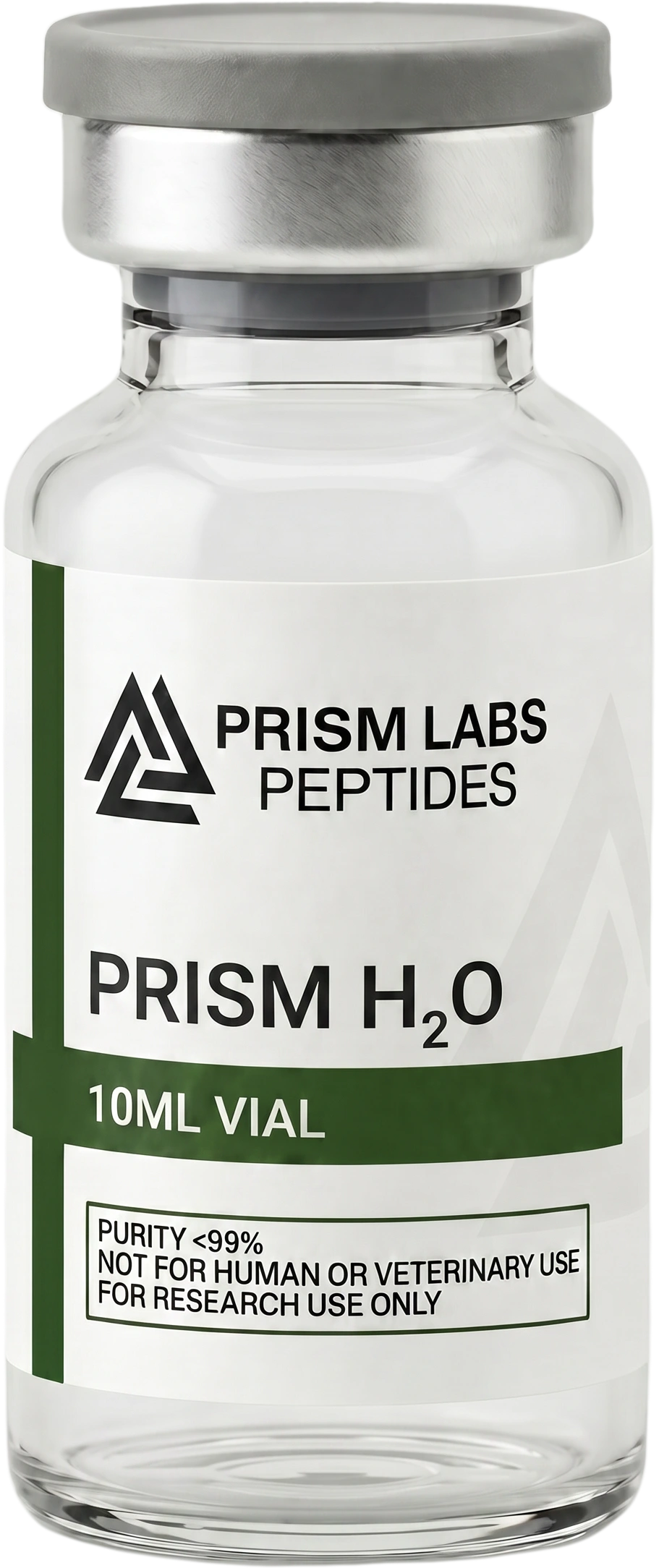
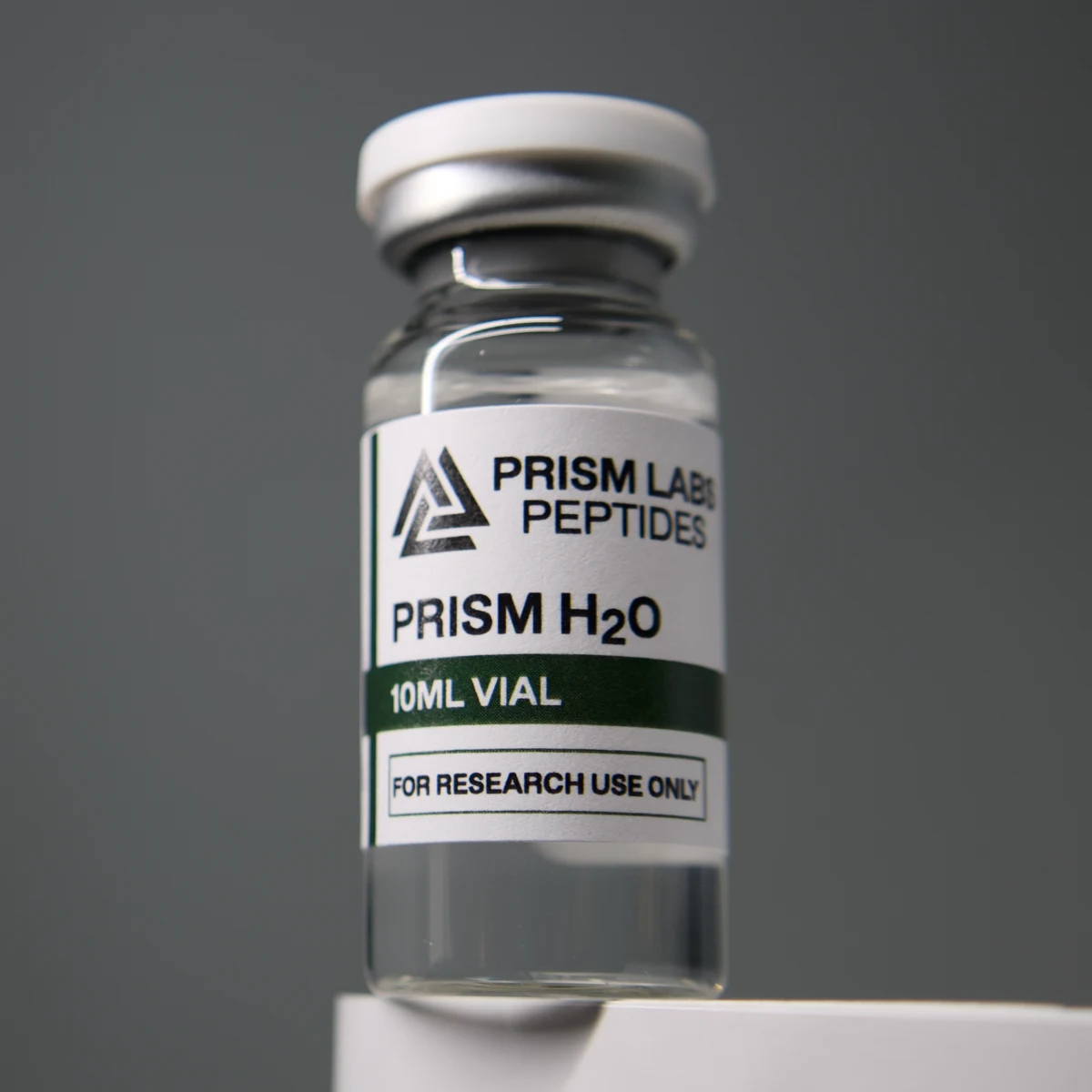
- Bacteriostatic water, such as .
- A new sterile syringe and needle, large enough to hold all the water you plan to add.
- Alcohol swabs, a fresh one for each stopper.
- A pen or label for the vial.
Decide how much water you will add before you start; the concentration math is below. Prism Labs sells its peptides and bacteriostatic water for laboratory research use only, and this guide covers handling them in the lab.
02
Step by step
Seven steps, in order:
- Let the vial reach room temperature. If it was in the fridge or freezer, leave it on the bench first. A cold vial collects condensation on the glass and stopper.
- Disinfect the stoppers. Remove the plastic caps, wipe the rubber stopper on the peptide vial and on the water vial with a fresh alcohol swab, and let them air-dry.
- Add the water slowly, down the inside wall. Draw the planned volume into a new sterile syringe, push the needle through the center of the peptide vial’s stopper, and angle it so the water runs down the glass. Do not spray it straight onto the powder.
- Swirl or roll gently. Move the vial in slow circles, or roll it between your palms. Do not shake it.
- Let it dissolve fully, then check it. Give it time; some powders take a few minutes. Hold the vial up to the light: the solution should be clear, with no cloudiness, flakes or particles, and no powder left on the walls.
- Label it. Write the concentration and the date you mixed it on the vial.
- Refrigerate it. Keep it upright in the fridge at 2 to 8 °C, away from light and out of the door.
The hygiene steps follow the CDC’s checklist for healthcare settings: clean hands and a clean area, a rubber stopper disinfected with alcohol before it is pierced, and a new needle and a new syringe for every entry into a vial.
Sources: [1] CDC · Injection Safety Checklist
03
Why you swirl instead of shake
Peptide molecules can stick to one another and clump, a process called aggregation. The clumps range from shapeless aggregates to ordered fibers.
A 2017 review of the factors that affect peptide aggregation covers physical ones such as agitation and temperature, along with surfaces and interfaces.
Shaking brings two of those into play at once: it agitates the solution, and it whips in air, creating far more surface where liquid meets air. A jet of water aimed straight at the powder churns it the same way. Running the water down the glass and swirling slowly keep both to a minimum.
Sources: [2] Interface Focus · 2017
04
Work out the concentration
Concentration is the amount of peptide in the vial divided by the volume of water you add. A worked example:
- Vial: 10 mg of peptide.
- Water added: 2 mL.
- Concentration: 10 mg ÷ 2 mL = 5 mg/mL.
- Syringe scale: on a U-100 syringe, 100 units = 1 mL, so one unit is 0.01 mL.
- Peptide per unit: 5 mg/mL × 0.01 mL = 0.05 mg, which is 50 mcg.
More water makes a weaker solution, so each unit holds less peptide; less water makes a stronger one. The amount of peptide in the vial stays the same either way.
The peptide calculator does this math for any vial size, water volume and dose, and its chart lists the concentration and peptide per unit for common vial sizes.
05
Which water to use
Bacteriostatic water is sterile water with a small amount of benzyl alcohol, a preservative that limits bacterial growth between entries. That makes it the usual choice for a vial you will draw from more than once.
Sterile water has no preservative and is meant for a single use. The full comparison: bacteriostatic vs sterile water.
An opened vial of bacteriostatic water has its own time limit: how long bacteriostatic water lasts. If the documentation for your material names a different solvent, use that instead.
06
Troubleshooting
When something looks wrong:
- Foam or bubbles: stand the vial upright and let them settle. Do not shake it to clear them. Next time, add the water more slowly, down the side.
- Powder stuck to the stopper or walls: tilt the vial and roll it slowly so the liquid washes over the powder, then stand it upright. Before you add water, a few gentle taps on the side of the vial bring loose powder down to the bottom.
- Cloudy right after mixing: the powder may still be dissolving. Let it stand, then swirl gently again.
- Still cloudy once it has had time, or particles you can see: do not use it. Discard the vial.
Slow dissolving and particles can also be a sign that the powder was stored too warm. In a 2015 FDA laboratory study, a lyophilized peptide hormone kept warm and humid formed larger particles and took longer to dissolve.
07
Storing it after mixing
Once dissolved, a peptide sits in water full time and breaks down faster than dry powder. Keep the vial in the fridge, upright and away from light.
Avoid freezing and thawing it repeatedly. If a solution must be frozen, split it into single-use portions first.
How long it keeps depends on the peptide, so follow the documentation for your material. The full guide: how to store peptides.
A little more clarity
Questions, answered
How much bacteriostatic water do I add to a peptide vial?
It depends on the concentration you want: mL of water = mg in the vial ÷ the mg/mL you want. For example, 10 mg in 2 mL gives 5 mg/mL. The peptide calculator shows the math, with a chart of common vial sizes and water volumes.
Should you shake a peptide vial?
No. Swirl it or roll it gently between your palms. Agitation is one of the factors that affect peptide aggregation, and shaking also whips air into the solution.
Why is my peptide cloudy?
Right after mixing, the powder may still be dissolving: let it stand, then swirl gently. If it stays cloudy once dissolved, or you can see particles, do not use it. Discard the vial.
Can I use sterile water instead of bacteriostatic water?
For a single use, sterile water works as a solvent. It has no preservative, so for a vial you will enter more than once, bacteriostatic water is the usual choice.
How long does a reconstituted peptide last?
It depends on the peptide. Keep it in the fridge, follow the documentation for your material, and discard it if it turns cloudy or shows particles. Storage details: how to store peptides.
Follow the evidence
Sources & reading notes
Open the original record for its methods and limitations. The sources below do not certify the supplied product or its finished formulation.
- CDC · Injection Safety Checklist ↗
Disinfect the stopper and use a new needle and syringe for every vial entry.
- Interface Focus · 2017 ↗
Review of the factors that affect peptide aggregation, including agitation, temperature, and surfaces and interfaces.
- International Journal of Pharmaceutics · 2015 ↗
FDA laboratory study: a lyophilized peptide stored warm and humid formed larger particles and took longer to dissolve.
Prepared by Prism Labs from the linked source records and public product documentation. General laboratory practice for research use only; not a claim about outcomes. Send a source correction.
Keep exploring
More from the research library.
Where to buy peptides
Eight checks that separate a documented supplier from a risky one.
Read the article ↗GuidesHow to read a peptide COA
Three results, three different questions. Read them separately.
Read the article ↗GuidesHow to store peptides
What water, heat, light and repeated freezing do to a peptide, and how to limit each.
Read the article ↗